
Explainer: Problem of plenty for wheat stocks in Punjab
By Ruchika Khanna
THE wheat procurement season in Punjab is almost over, but a problem of plenty now plagues the state. There are no takers for the wheat procured by the Central and state government agencies this year.
On May 7, Punjab had already exceeded its target of procuring 122 lakh metric tonnes (LMT) of wheat. A total of 122.07 LMT has been purchased by the state government agencies and the Food Corporation of India. Some 500-odd mandis, of the total of 2,883, are still operational in the state.
While the bulk of the purchase has been made by government agencies, a mere 1.4 LMT has been bought by private traders and flour mill owners. They preferred to buy cheaper wheat, at prices below the MSP, from the neighbouring states of Uttar Pradesh and Rajasthan.
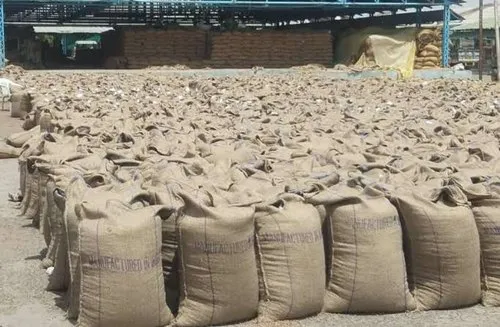
Till May 7, a little over 39 LMT of wheat lay unlifted in the mandis. That is mainly because the state has no space to store this year’s produce as the godowns as well as covered and plinth storages are filled to the brim — with both wheat and rice milled from paddy bought last year.
Direct transfer to states
Before the procurement season began, Chief Minister Bhagwant Singh Mann met the Union Minister for Consumer Affairs, Food and Public Distribution, urging him to ensure that 22 LMT of wheat was lifted directly from Punjab’s mandis. The state government claims that a mere 3.5 LMT has been directly lifted and sent to the recipient states.
“We had asked for 860 trains to ferry the wheat out of Punjab. But till May 7, only 184 trains were allotted to us. What makes the problem worse is that the paddy procured last year is still with millers, who are not milling rice as we have no space to strife the rice. Around 78 LMT of paddy, which would give us 48 LMT of rice, is still with mills and we are delaying taking deliveries because of the space crunch,” said a senior officer in the Food and Supply Department.
He added that till last year, an average of 20-25 trains would ferry grains out of Punjab each day. But this year, initially an average of five-six trains were commissioned. “It’s only for the past two days that they have increased the number of trains to 18-20, after we again pressed the Central government to increase the movement of wheat from the state.”
Over-stocked central pool
The reason for the slow movement of grains out of Punjab is that this year the granaries of the country are brimming with grains. As on May 1, the Central pool had wheat stocks of 36 million tonnes, which is much above the buffer requirement of 27.58 million tonnes. It is after a gap of five years that the country has such a high stock of this staple grain.
Meanwhile, Naresh Ghai, president of the Punjab Roller Flour Mills Association, said that last year, private millers had purchased 10.8 LMT of wheat, against 1.4 LMT this time.
“This year, the MSP is Rs 2,585 per quintal, and after adding mandi charges of 3.5 per cent and transportation charges, it costs us Rs 2,700 per quintal. The landing price of wheat purchased directly from Uttar Pradesh is Rs 2,630. With prices of wheat flour falling and now hovering at Rs 28 per kg, buying wheat from Punjab and processing it to atta is economically unviable. So private participation in wheat procurement is negligible this year, as compared to 2025,” he added.
This article has been republished from The Tribune.