
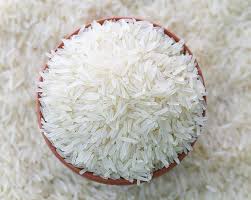
Make way for ‘designer rice’ with three times more protein, nutritional value
By Surya S Pillai
Scientists at CSIR-NIIST have developed a “designer rice” that packs three times the protein of normal grains while maintaining a low glycemic index to help manage diabetes.
By transforming broken rice into a nutrient-dense powerhouse, this innovation aims to nourish millions and tackle malnutrition one plate at a time.
Despite being a staple, polished white rice has a major nutritional limitation: it is mostly made of starch. Because of high starch content, white rice can cause a rapid spike in blood sugar levels after a meal. Over time, this has been linked to the growing burden of Type 2 diabetes in India.
At the same time, many people who consume enough calories through rice-based diets still suffer from protein and micronutrient deficiencies, a condition often referred to as “hidden hunger.”
Scientists at Council of Scientific and Industrial Research’s National Institute for Interdisciplinary Science and Technology (CSIR-NIIST) in Thiruvananthapuram have developed this new solution that could address both problems at once.
“This is not a grain with vitamins and minerals merely sprayed onto its surface; it is a fundamental re-architecture of our most basic staple. By deconstructing the rice grain into its primary components — starch, protein, and fibre — and then precisely reassembling them, we have created a nutrient-dense food that functions as a proactive, structural solution for metabolic health,” Dr Sudip Karmakar, Science Communication and Dissemination Directorate (SCDD), CSIR-HQ said.
“This process allows the rice to retain its familiar taste and cooking properties while delivering a superior nutritional profile,” he said.
The project is being led by C Anandharamakrishnan, Director of CSIR-NIIST, who describes the innovation as a form of “food architecture.”
“It is like rebuilding a house. If regular rice is mostly made of starch, we remove some of that and strengthen the structure with protein. Importantly, the process does not involve genetic modification. Instead, it uses food-processing technology to reshape the nutritional composition of the grain,” he said.
One of the most interesting aspects of this innovation is the use of broken rice, small fragments that are produced during the milling process.
Broken rice is usually sold at lower prices and is often considered a lower-value by-product. In this new method, scientists grind these fragments into flour and mix them with protein and micronutrients such as iron, folic acid, and Vitamin B12.
The mixture is then processed and reshaped into grains that look and cook like normal rice.
Despite the changes in composition, researchers say the final product still has the familiar taste, texture, and cooking properties that people expect from rice.
To ensure the technology reaches consumers, CSIR-NIIST has partnered with industry. The technology has already been transferred to Tata Consumer Products for further development and commercial production.
This article has been republished from The Tribune.