
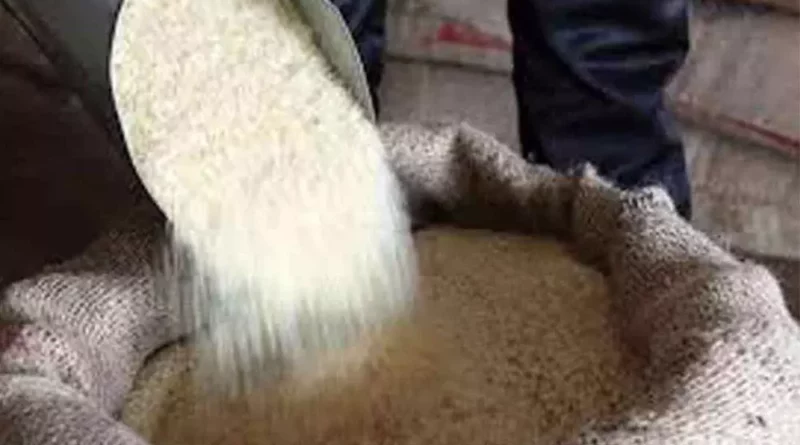
From food security to quality food: Telangana’s fine rice welfare experiment
By Amaravaji Nagaraju
In the landscape of public policy, welfare programmes are often assessed by their reach and scale. Telangana’s fine rice distribution scheme, however, introduces an additional parameter-quality. Conceived as an intervention that goes beyond mere hunger alleviation, the programme seeks to improve the nutritional intake of economically vulnerable households. In doing so, it reflects an evolving understanding of welfare as not just subsistence support, but as an instrument of social dignity and equity
Launched a year ago, the scheme has since expanded across the state with considerable administrative coordination. What began as a targeted initiative has grown into a large-scale public distribution effort, reaching an estimated 31 million beneficiaries through nearly nine million ration cards. The monthly provision of six kg of fine rice per beneficiary underscores both the logistical capacity of the state and its commitment to sustained welfare delivery.
The intervention gains significance against the backdrop of long-standing concerns surrounding the Public Distribution System (PDS). For decades, the system has been criticised for the inconsistent quality of food grains supplied, often resulting in underutilisation and diversion.
By introducing fine rice, the Telangana government has attempted to address this structural limitation. Improved grain quality has not only enhanced acceptability among beneficiaries but also contributed to better dietary practices.
Studies indicating higher nutritional value particularly beneficial for children, pregnant women and the elderly point to the scheme’s potential long-term public health impact.
Economically, the scheme offers tangible relief to low-income families. With market prices of fine rice ranging between ₹60 and ₹70 per kg, the free monthly allocation translates into meaningful savings. For many households, this reduction in food expenditure creates fiscal space for other essential needs such as education, healthcare and housing. At a macro level, the programme functions as a significant income support mechanism, reinforcing the state’s welfare architecture.
An equally important outcome has been the apparent reduction in leakages within the distribution system. Historically, lower-quality ration rice often found its way into informal markets through diversion. The improved quality of fine rice has altered this dynamic, encouraging direct household consumption and thereby reducing the scope for illegal trade. The shift highlights a key policy insight: improving quality can strengthen efficiency and accountability in welfare delivery.
Technology has played a supportive role in this transition. The integration of digital ration cards, Aadhaar linkage and biometric authentication has enhanced transparency and streamlined beneficiary identification. Such measures have helped reduce duplication and ensure that entitlements reach intended recipients. Nonetheless, operational challenges persist. Reports of supply delays and occasional quality-related complaints in certain regions indicate the need for continuous monitoring and responsive grievance redressal.
From a broader policy perspective, Telangana’s approach introduces an important innovation in welfare design. While most states continue to prioritise quantity under the PDS framework, this initiative foregrounds the role of quality in achieving meaningful outcomes. At the same time, questions of fiscal sustainability, procurement efficiency and long-term scalability remain relevant and warrant periodic review.
Ultimately, the fine rice distribution scheme represents a shift in the philosophy of welfare from ensuring minimum consumption to enabling better living standards. By recognising that access to quality food is integral to human dignity, the programme moves the discourse beyond conventional metrics.
As it completes a year, it offers valuable lessons for policymakers: that well designed interventions, backed by administrative resolve, can redefine the contours of inclusive governance.
With market prices of fine rice ranging between Rs 60 and Rs 70 per kg, the free monthly allocation translates into meaningful savings. For many households, this reduction in food expenditure creates fiscal space for other essential needs such as education, healthcare and housing. At a macro level, the programme functions as a significant income support mechanism, reinforcing the state’s welfare architecture.
This article has been republished from The Hans India.