
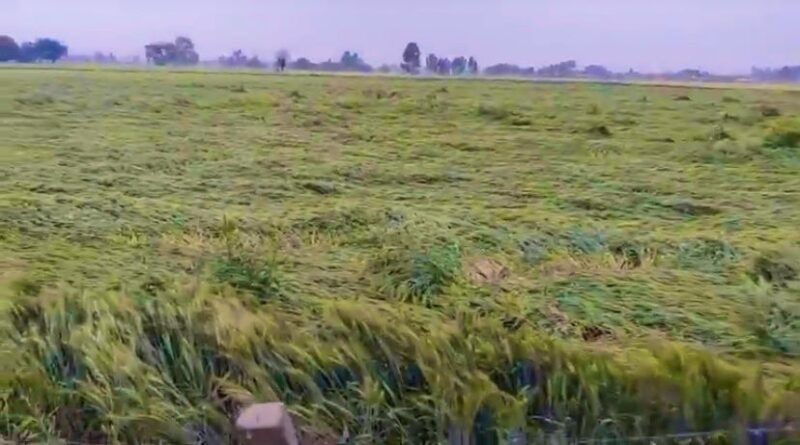
Unseasonal rains sow anxiety for farmers; likely to delay wheat harvest in Malwa belt
By Kulwinder Sandhu
The latest spell of unseasonal rains across Patiala, Fatehgarh Sahib, Mohali and several other parts of the Malwa belt in Punjab is likely to delay wheat harvesting by nearly two weeks, raising concerns among farmers about possible deterioration in grain quality.
Although the state government began wheat procurement from April 1, officials in the agriculture department said harvesting would gather momentum only after about two weeks, around the time of Baisakhi, due to the prevailing wet weather conditions.
The fresh rainfall on Friday further worried farmers who feared that prolonged moisture could trigger fungal diseases such as black point, putting the quality of wheat grains at risk. “The fresh spell of rain is not good for the wheat crop. It can trigger black point infection in the grains and affect the quality,” said Jaswinder Singh Brar, former deputy director of the Agriculture Department.
Although there is no confirmed outbreak of the disease, symptoms may become visible only after the crop is harvested, he said. Black point infection typically causes dark discolouration at the embryo end of the wheat grain.
Brar pointed out that the test weight — the grain weight per unit volume — is among the quality traits most vulnerable to persistent wet conditions and repeated wetting of mature grain in the field before harvesting could reduce its density. Each time the grain gets wet it swells and may not return to its original size after drying. As a result, the enlarged kernels occupy more space while weighing nearly the same, reducing the overall test weight, he explained.
Harbhajan Singh, a farmer from Roorkee village on the Patiala–Sirhind road, said the rainfall and delay in harvesting could also lead to pre-harvest sprouting in some wheat varieties that were already vulnerable due to the recent hailstorm. Harvesting at a moisture level of about 18 per cent can help reduce losses, though the grain must be dried to below 14 per cent moisture before selling in the markets, he said.
As per procurement specifications of the Food Corporation of India (FCI), the standard moisture limit for wheat procurement is 12 per cent, with a maximum permissible limit of 14 per cent. The grains exceeding this limit are often rejected at mandis to prevent spoilage and infestation during storage. The intermittent rainfall over the past week disrupting harvesting operations, farm unions have demanded that the Central Government relax procurement norms to safeguard the interests of farmers.
This article has been republished from The Tribune.